
Engineering Guide · 2 min read
ASTM A320 Grade L7 Studs and the Charpy Impact Test
Two L7 test sets can have the same average impact energy, yet only one meets the individual minimum. The readings and specimen size explain why.
The short answer. ASTM A320 Grade L7 is quenched-and-tempered chromium-molybdenum steel for low-temperature bolting. For a ¾-in. L7 stud tested with full-size Charpy specimens at −150 °F, the three specimens must average at least 20 ft·lbf, and each must absorb at least 15 ft·lbf. [1]
This article in the ASTM A320 bolting series follows those two figures through a material test report.
Consider two sets of results for the same specimen size and temperature. Both average 20 ft·lbf. Only one meets both energy limits. [1]
| Three readings (ft·lbf) | Average | Lowest | Meets both limits? |
|---|---|---|---|
| 16, 21, 23 | 20 | 16 | Yes |
| 14, 22, 24 | 20 | 14 | No. One specimen is below 15. |
The second set misses the individual minimum. For a nonconforming lot, A320 refers the manufacturer to the retreatment and testing provisions of ASTM A962/A962M. [1]
What the pendulum measures
A room-temperature tensile test pulls the steel until it breaks. For L7 studs through 2½ in. in diameter, A320 sets a minimum tensile strength of 125 ksi and a minimum yield strength of 105 ksi. The cold test asks how much energy the same material can absorb when a blow opens a crack at a notch. Steel can meet its tensile requirement and still give a low impact reading. [1] [2]
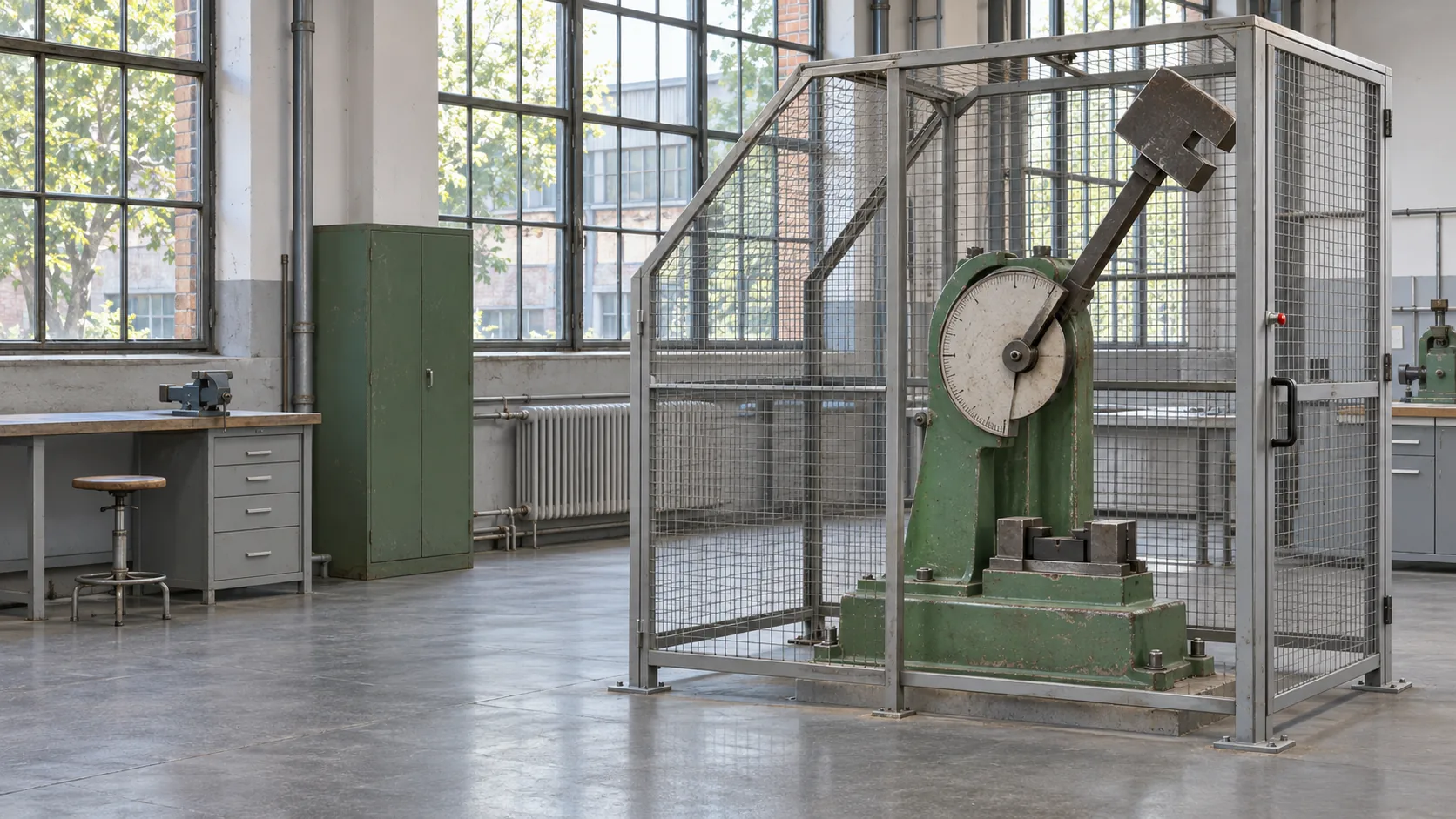
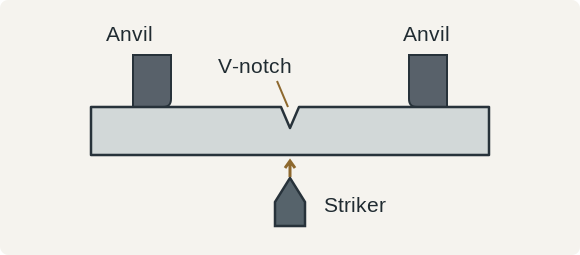
For the Charpy V-notch test, the laboratory cools a machined specimen to the test temperature and places it against two anvils. A pendulum strikes the face opposite the notch. The energy the specimen absorbs leaves the pendulum with less energy on the upswing. Each blow gives one of the three readings on the report. [1] [2]
Why the specimen size belongs beside the result
A result of 14 ft·lbf has two possible readings. On the full-size specimen above, it falls below the single-specimen minimum. In a separate test using a permitted 10 × 7.5 mm specimen, the same reading clears the 12 ft·lbf individual minimum. The three smaller specimens must still average at least 16 ft·lbf. Use the cross section recorded by the laboratory to select the applicable limits. [1]
The diameter on the purchase order answers another question. The base specification exempts bolting ½ in. and smaller from routine impact testing. For the ¾-in. set used here, trace the stud results to the supplied lot and look for the separate results covering the mating Grade 7 nut material. An impact value reported for the stud steel tells you nothing about a different heat used for the nuts. [1]
If the drawing also limits hardness because the bolting can encounter wet hydrogen sulfide, the grade choice changes. Why Specify ASTM A320 Grade L7M Instead of L7?
References
- ASTM A320/A320M-26. Tables 1 and 2, §§6.2, 9 and 10.1. Tensile properties, specimen sizes, energy limits and nut material.
- E. Lucon and J. Splett, Journal of Research of NIST 123 (2018). Effect of Charpy Striker Configuration on Low- and High-Energy NIST Verification Specimens. See the test arrangement in §1.