
Engineering Guide · 10 min read
Dacromet-Coated Fasteners: Chinese Standards and Process
Start with GB/T 5267.2 for fasteners, distinguish the Chinese zinc-chromate and zinc-aluminum specifications, then follow the coating process and inspection requirements.
The short answer: GB/T 5267.2-2021 is China’s fastener-specific standard for non-electrolytically applied zinc-flake coatings. Start there when specifying Dacromet-coated bolts and nuts. GB/T 18684-2002 covers traditional zinc-chromate coatings; GB/T 26110-2025 covers zinc-aluminum coatings. State the coating family, chromium restriction and performance designation on the order.[1] [2] [3]
Part of the Dacromet and zinc-flake coating guide series.
Start with GB/T 5267.2 for fasteners
For a bolt or nut, establish the requirements for the finished fastener before choosing a coating grade. GB/T 5267.2-2021 addresses non-electrolytically applied zinc-flake systems on fasteners, including the connection between coating build, thread fit and the controlled application process.[1]
GB/T 18684 and GB/T 26110 describe coating families. If the quotation also specifies a coating grade under GB/T 18684 or GB/T 26110, name that standard and grade explicitly alongside the fastener requirements. An automotive drawing may also invoke QC/T 721-2024 or an OEM specification; QC/T 721 is an automotive industry standard, rather than another GB/T edition.[2] [3] [4]
| Specification | Use it for | What to establish on the order |
|---|---|---|
| GB/T 5267.2-2021 | Zinc-flake coating systems for fasteners | Complete coating designation, pretreatment and thermal controls, post-coating thread fit and any agreed friction requirement |
| GB/T 18684-2002 | Traditional zinc-chromate coatings; still current | Coating grade and mass. Coating mass governs acceptance in a dispute; listed thickness values are for reference. |
| GB/T 26110-2025 | Zinc-aluminum coatings, including topcoats and composite systems | Seven grades; specify chromium limits separately. This edition took effect July 1, 2026, replacing GB/T 26110-2010. |
| QC/T 721-2024 | Automotive zinc-aluminum flake coatings | The specified traditional or Cr(VI)-free class and customer requirements. Effective January 1, 2025, replacing the 2013 edition. |
GB/T 5267.2-2021 is a modified adoption of ISO 10683:2018. Its foreword lists substituted Chinese test references and an added informative ammonium-nitrate rapid-corrosion test. A contract naming ISO still requires conformity to that ISO edition; the certificate should identify the standard actually evaluated.[1]
GB/T 26110-2025 broadens the earlier definition, which expressly described a waterborne chromium-free coating. It adds provisions for topcoats, composite systems and testing, alongside harmful-substance and process-emission controls. Specify the chromium restriction separately from the standard number.[3]
Why “Grade 3 Dacromet” is incomplete
If a supplier quotes “Grade 3,” ask which standard defines that grade before relating it to the fastener specification.
Under GB/T 18684-2002, Grade 3 specifies at least 200 mg/dm² coating mass, a reference thickness of 5.8 μm and a minimum 480-hour neutral salt-spray requirement. Under GB/T 26110-2025, Grade 3 also has a 480-hour requirement, but the average-thickness band is 6 μm to below 8 μm and the coating definition differs. Matching the salt-spray number leaves those differences unresolved.[2] [3]
QC/T 721-2024 makes the ambiguity more visible. Its traditional Grade 3, DAC8, has a 1,000-hour requirement and a reference thickness of 8–12 μm. Its Cr(VI)-free Grade 3, Zn-Al·C, has a 960-hour requirement and a recommended thickness of 10–18 μm. Use these reference and recommended ranges with the full coating-class requirements and any additional thickness limits on the drawing.[4]
Specify the standard, edition, coating family and designation together. Use that standard’s measurement and dispute rules. GB/T 26110-2025 cautions against a fixed conversion between coating mass and thickness.[3]
What “Dacromet” means on a Chinese quotation
In Chinese sourcing, 达克罗 (Dacromet) may refer to the original zinc-chromate technology or, more loosely, to a modern zinc-flake finish. A quotation may call the latter “chromium-free Dacromet,” even when it uses a different binder and a different supplier’s coating. NOF’s technical history distinguishes DACROMET from its later chromium-free GEOMET technology.[5]
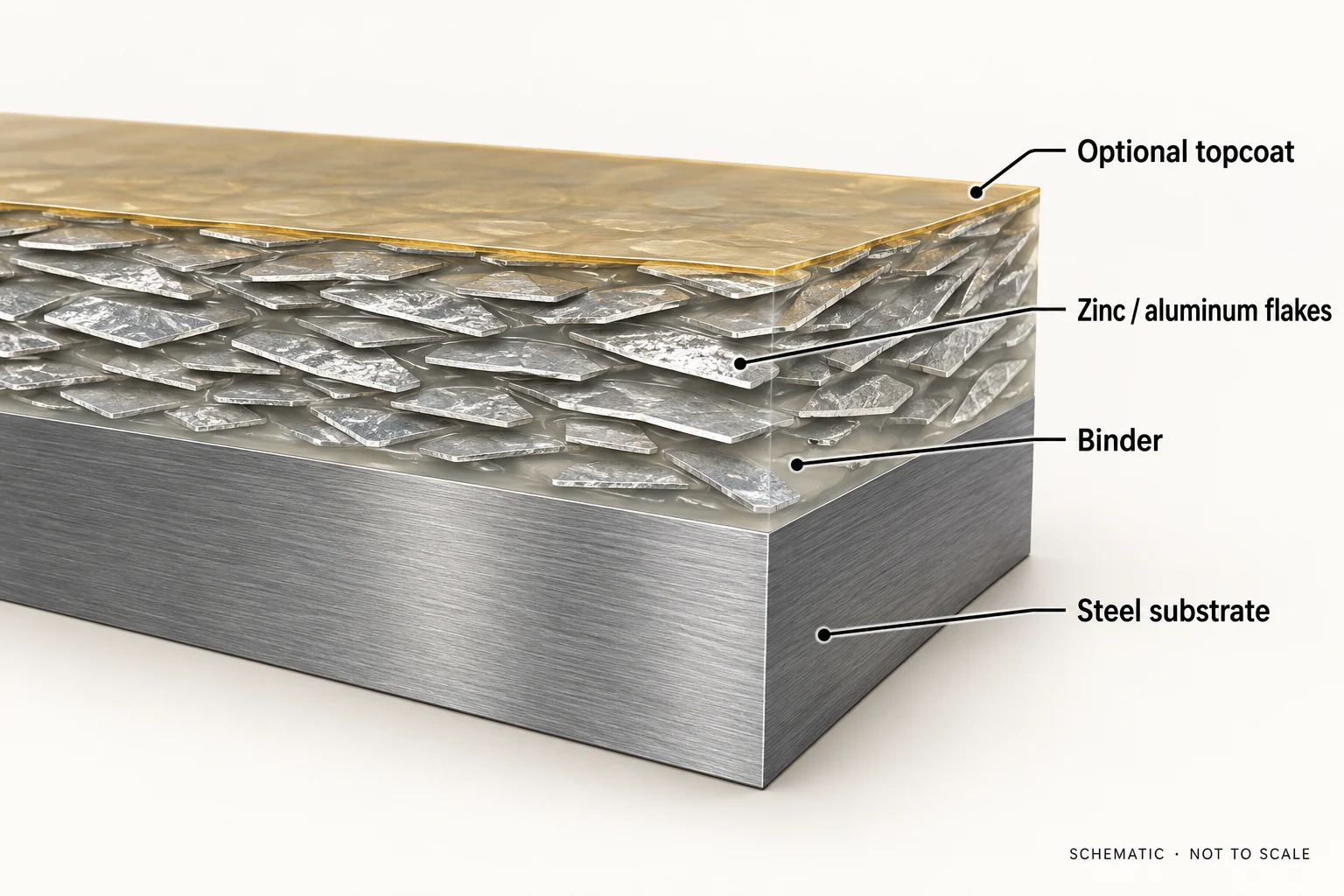
Traditional coatings use chromium-containing chemistry alongside metallic flakes. Chromium-free formulations use other binders and inhibitors. The change affects bath stability, curing and corrosion behavior; it requires a qualified formulation and process. For an order, identify the basecoat, topcoat or lubricant, and whether the restriction concerns hexavalent chromium, Cr(VI), or total chromium. Our chromium-free Dacromet article explains the purchasing terminology.
How the coating is applied
Dip-spin is used for many bulk fasteners: parts are immersed in the coating bath, then centrifuged to remove excess liquid. Large parts or geometries that drain poorly may need racked application or spraying. The coating developer’s process description and a Chinese railway-fastener study show the same main stages.[6] [8]
Clean and prepare the parts
Start with the material, property class, final heat treatment and thread allowance. Check recesses, holes and mating surfaces for drainage or masking requirements before selecting the route.
Remove forming oil and other contamination using the approved cleaning process. Wet cleaning includes rinsing and drying; thermal cleaning adds heat exposure that must suit the part. Blast-clean or otherwise remove rust and scale, then remove loose abrasive and dust. Cool the parts as required and keep the prepared surface clean until coating.
Dip, spin and control the coating build
Mix and disperse the coating according to the product instructions. Record the batch, viscosity, bath temperature, specified solids checks and usable life after mixing.
During application, basket loading, immersion time, spin speed, direction and tilt affect coverage and drainage. Check thread roots and recesses for retained liquid. A higher spin speed can leave less coating on the part, but the result depends on the geometry and coating formulation.
Pre-dry, cure and apply further coats
Pre-drying removes volatile components. Curing develops the binder and coating adhesion. Verify the required temperature and time on the parts, then cool them before the next operation.
Repeat the basecoat cycle where the system requires it. A topcoat or lubricant follows its own drying or curing schedule and can change friction, color and chemical resistance. Two coats and two bakes are common; the finished system still has to meet its specified tests.
Inspect and pack the finished lot
Check appearance, coating mass or thickness, adhesion, thread fit, corrosion and friction as required. Maintain lot traceability through sorting and packing, and control damage during handling. A salt-spray report should accompany these checks rather than stand in for them.
Pretreatment on high-strength fasteners
The non-electrolytic application step avoids the hydrogen generated during electrodeposition. Hydrogen can still enter steel during an unsuitable cleaning operation. For high-strength fasteners, specify the pretreatment route alongside the finish.
ISO 10683:2018 prohibits acid cleaning for fasteners above 390 HV or of property class 12.9 and above, and prohibits cathodic cleaning. Select a cleaning route that avoids hydrogen entry. GB/T 5267.2-2021 is the corresponding Chinese fastener standard, adopted with modifications from ISO 10683:2018; its foreword also identifies the change to a 390 HV acid-cleaning threshold.[7] [1]
For a 12.9 socket screw, “non-electrolytic coating” is therefore only the start of the specification. The process record must document the cleaning method and show that subsequent heat exposure preserves the screw’s required mechanical properties.
Curing temperature and hold time
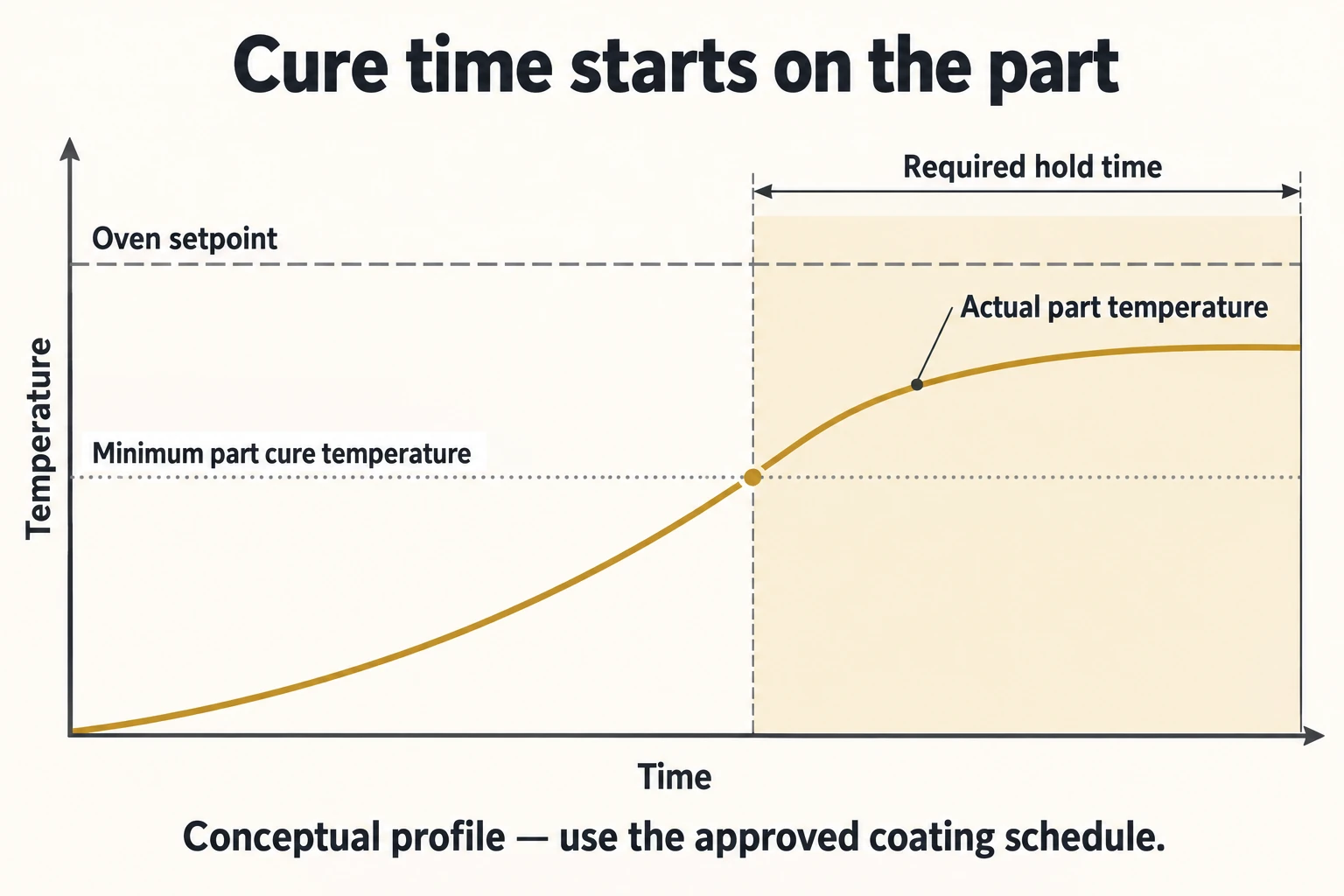
A furnace setpoint is not a part-temperature record. Heavy bolts and a densely loaded basket heat differently from thin test panels. State the required part-metal temperature and hold time, then establish a furnace profile for the actual loading arrangement. Include repeated basecoat and topcoat cycles in the heat-exposure review.[9]
Also separate manufacturing cure, a coating’s heat-resistance test and the permitted service temperature. GB/T 26110-2025 specifies a heat-resistance test at 150°C for three hours. That test condition is neither a universal cure schedule nor a continuous-use temperature rating.[3]
Two Chinese studies, two different cure schedules
The following papers show why the coating formulation and part must be considered together.
| Study | Coating and parts | Reported conditions |
|---|---|---|
| Railway screw spikes, 2026[8] | Commercial system with two basecoats and one topcoat | Basecoat: pre-dry at 120°C for 10–15 min; cure at 270°C for 20–30 min. Topcoat: 105°C pre-drying and a 190°C cure. |
| Q235 steel panels, 2024[10] | Sprayed silane/molybdate chromium-free formulation | 60-minute cures from 240°C to 600°C; 330°C gave the best overall corrosion response within that experiment. |
The screw-spike study also adjusted spin speed, direction and basket tilt. Its schedule applies to that coating combination and geometry. The Q235 panel results do not establish a suitable cure for heat-treated bolts.
ISO 10683:2018 describes curing temperatures up to 320°C and requires the cure not to exceed the tempering temperature of quenched-and-tempered fasteners. Assess a research result at 330°C or above separately from conformity to that fastener specification.[7]
What to check on the finished lot
Corrosion testing needs a method, exposure time, evaluation surface and failure criterion. ISO 9227 defines salt-spray methods; the coating or product specification supplies the required duration. Test hours have no direct conversion into years of outdoor life.[11]
The sampling point also matters. ISO 10683 distinguishes the as-coated condition from damage introduced by later handling and assembly, and calls for corrosion testing to start at least 24 hours after coating. Agree on any additional requirement for delivered or assembled parts.[7]
| Check | What the lot record should identify |
|---|---|
| Coating identity | Basecoat, topcoat or lubricant, coating batches, applicator and declared chromium status |
| Process and heat exposure | Pretreatment, coat sequence, loading arrangement and validated cure profile |
| Coating and fit | Applicable mass or thickness result, adhesion, appearance, post-coating thread gauging and recess clearance |
| Corrosion | Test method, hours, sample condition and specified red-rust or other acceptance criterion |
| Assembly behavior | Required friction or torque/clamp-force range, test method, mating components and lubricant condition |
A topcoat change can alter clamp load even when corrosion results remain acceptable. Where controlled tightening matters, specify torque/clamp-force testing, such as ISO 16047 or the applicable Chinese method, and test the intended bolt, nut and bearing-surface combination.[12]
What to put on the RFQ
Send the supplier the current fastener drawing and specify the coating standard. Include the following details in the RFQ.
- Part: material, property class, thread size and tolerance, final heat treatment, quantity and drawing revision.
- Finish: standard and edition, coating designation, approved basecoat and topcoat, color, and Cr(VI) or total-chromium restriction.
- Process limits: approved pretreatment, permitted thermal exposure, masking and post-coating fit requirements.
- Tests: coating mass or thickness, corrosion method and hours, failure criterion, friction range and mating test components.
- Release documents: applicator approval where required, lot certificate, test reports and rules for substitutions.
If the drawing names GEOMET, use the GEOMET series comparison to check the specified product. For the broader choice between zinc flake and electroplated zinc, return to the main Dacromet guide.
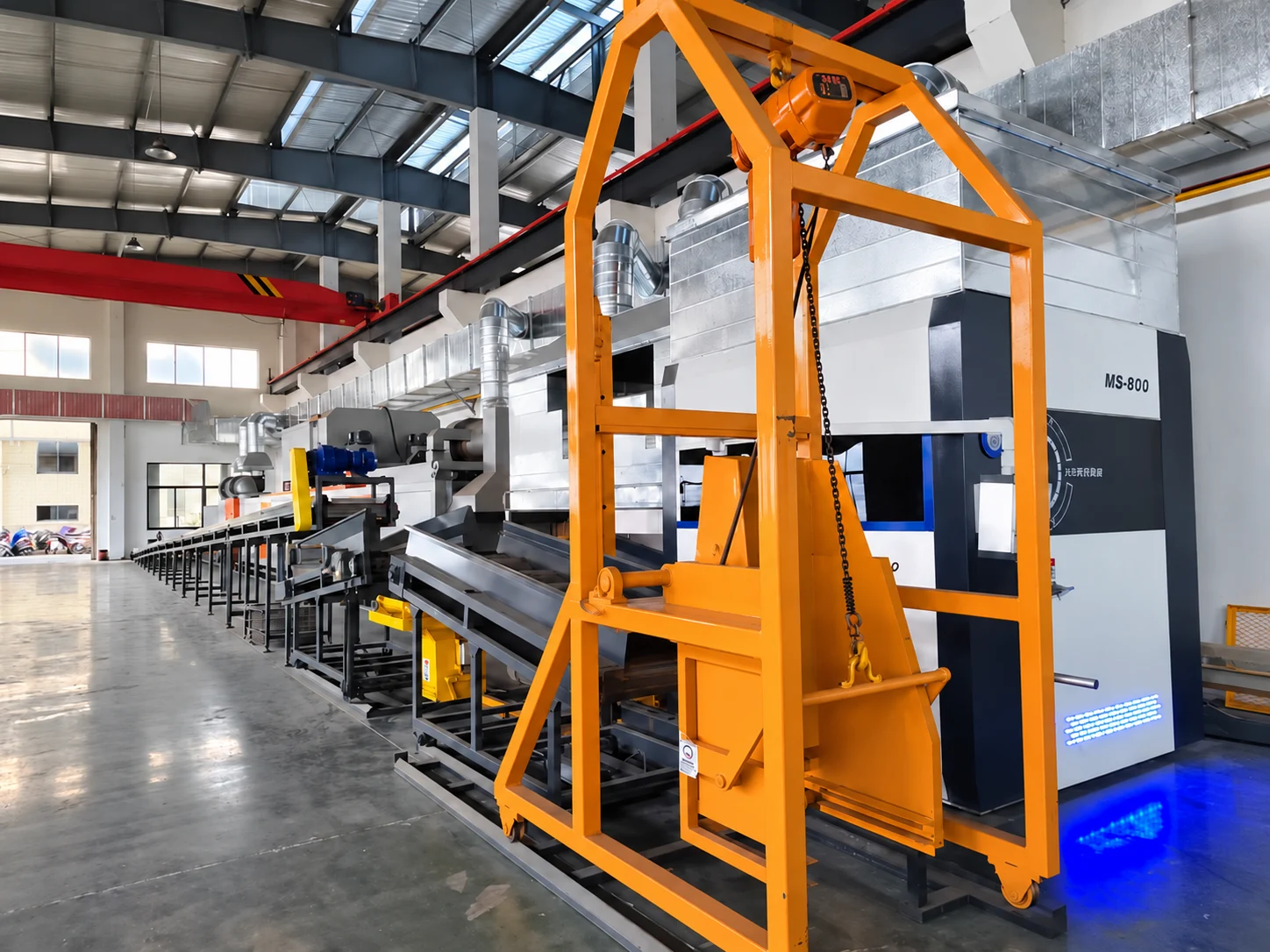
Cover photograph: Shisheng Machinery’s fastener coating line, edited for clarity, with loose items removed and the lifting frame recolored. Diagrams are explanatory illustrations.
References
- SAMR/SAC — GB/T 5267.2-2021, Fasteners: Non-electrolytically applied zinc flake coating systems. Official status and modified adoption of ISO 10683:2018; public foreword preview identifies the Chinese modifications.
- SAMR/SAC — GB/T 18684-2002, Zinc chromate coatings: Technical specifications. Official text, Tables 1–2; current status in the national standards catalog.
- SAMR/SAC — GB/T 26110-2025, Technical specification for zinc-aluminum coatings. Foreword, definitions, grading and test clauses; implemented July 1, 2026.
- National Industry Standards Information Platform — QC/T 721-2024. Official text, Tables 1–4.
- NOF Metal Coatings — Group history. Development of DACROMET and chromium-free GEOMET.
- NOF Metal Coatings — Virtual Reality: Bulk Dip-Spin Process, June 13, 2025. Mixing, dipping, spinning, drying and curing.
- ISO — ISO 10683:2018, Fasteners: Non-electrolytically applied zinc flake coating systems. In particular, Clauses 4.3–4.4 and corrosion-test provisions.
- Zhang Huan, Si Wanqiang, et al. Zinc-aluminum coating for anticorrosion of railway screw spikes: technology and implementation [Chinese]. Electroplating & Finishing, 2026, 45(6):166–171. DOI: 10.19289/j.1004-227x.2026.06.020. Process parameters: Table 2.
- Salim Brahimi. Effect of Surface Processing Variables on Hydrogen Embrittlement of Steel Fasteners. McGill University thesis, 2007. Process descriptions distinguish part-metal temperature and hold time.
- Xu Chi, Bian Qiyu, et al. Effect of temperature on microstructure and corrosion resistance of chromium-free Dacromet coating [Chinese]. Electroplating & Finishing, 2024, 43(2):131–142. DOI: 10.19289/j.1004-227x.2024.02.017.
- ISO — ISO 9227:2022, Corrosion tests in artificial atmospheres: Salt spray tests.
- ISO — ISO 16047, Fasteners: Torque/clamp force testing.