
Engineering Guide · 5 min read
Bolt and Screw Head Types: ASME and ISO Identification Guide
Identify hex, socket, button, countersunk, pan and flange heads. Match the profile, drive and bearing surface to the relevant ASME or ISO product standard.
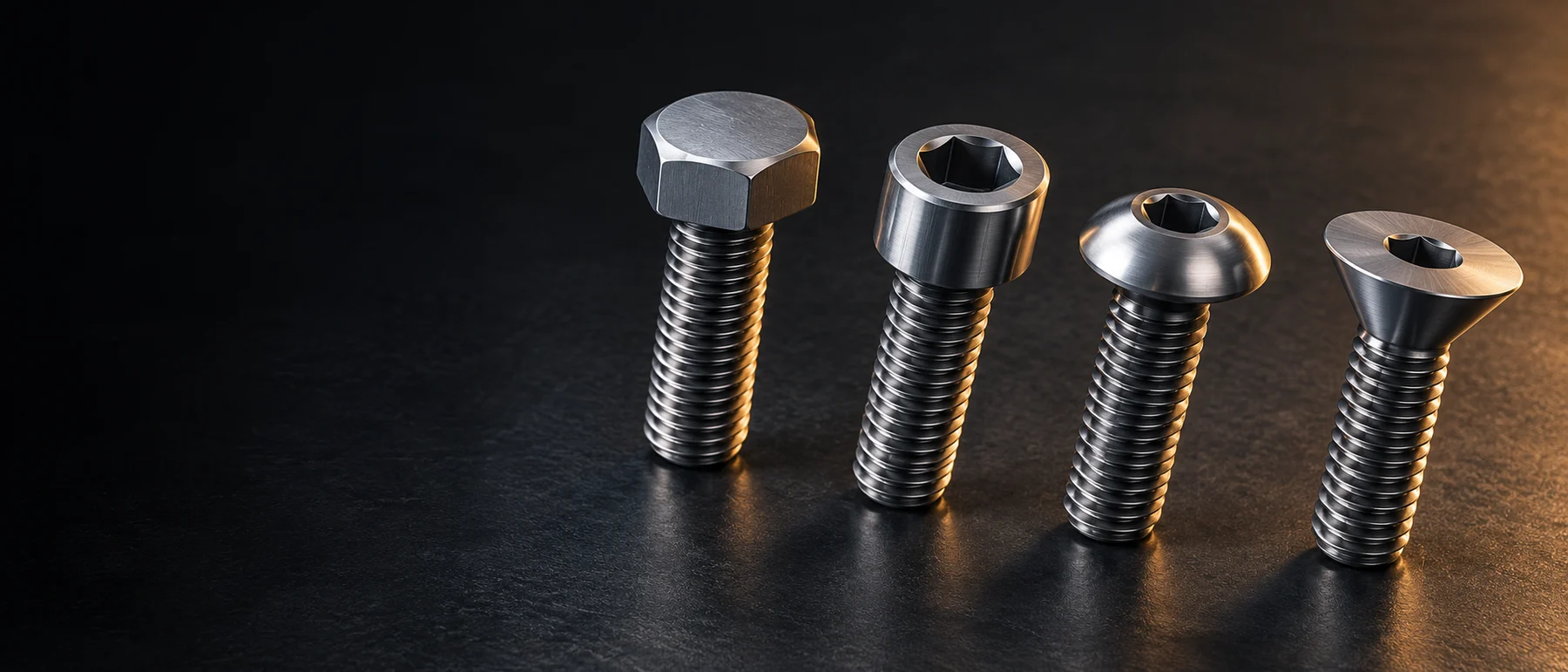
The short answer: identify the head profile, the driving feature and the bearing surface before choosing a product standard. A request for a “cap bolt” still needs those details. A hexagonal drive recess can appear in a cylindrical, button or countersunk head, while a similar-looking head may belong to an inch or a metric product. Use the shape to find the right standard family, then verify the specified dimensions and edition.[1][2][3]
Explore the head-type guides
- Socket Head Cap Screws: ASME B18.3, ISO 4762 and DIN 912Cylindrical socket heads, inch and metric forms, and the DIN 912 designation.
- Hex Flange Bolts: ASME B18.2.1, ISO 4162 and DIN 6921Integral flange identification, ISO product grades and the DIN 6921 replacement history.
- Hex Head Bolts: ASME B18.2.1, ISO 4014, ISO 4017 and DINHex bolt and hex cap screw forms, thread length and DIN-to-ISO wrench sizes.
- Button Head Screws: ASME B18.3 and ISO 7380-1 / -2Heads with or without a collar and their reduced loadability.
- Flat Countersunk Screws: ASME B18.3, ISO 10642 and DIN 7991Head angle, matching countersink and overall length.
- Pan Head Screws: ISO 7045, DIN 7985 and ASME B18.6.3Recess types and machine-screw versus tapping-screw threads.
The identification chart below covers the wider head family; the linked dimension pages provide the existing inch-series references.
Read the profile, drive and bearing surface separately
Head profile describes the outside shape. Drive describes how the tool turns the screw. Bearing surface describes where the head seats against the joint. “Socket” by itself identifies a drive feature, not one unique head profile.

A low domed button head and a cylindrical socket head can both take a hex key. A pan head with a cross recess is a different combination again. Match the complete head-and-drive description before selecting a standard.[2][4][6]
Match the head to a standard family
ASME and ISO both publish technical standards. Their product standards define the dimensions and other requirements used to specify the covered fasteners. In this guide, the ASME references cover inch-series products and the ISO references cover metric products. Read the scope of the particular document when choosing a standard.[1][2][3][7]
One standard number can cover several head shapes. ASME B18.2.1-2012 (R2021) groups several bolt and screw forms in one document, including conventional hex heads and hex flange heads. Each product form has its own dimensional requirements. The repeated number tells you where to look; the product name tells you which form to select within that document.[1]
The ISO references in this table divide the products across separate documents. ISO 4014:2022 covers its specified hexagon-head bolts, ISO 15071:2011 covers small-series hexagon flange bolts, and ISO 4762:2004 covers cylindrical hexagon socket head cap screws. That is why the hex and flange rows share an ASME reference but show different ISO references. These are product-standard routes to check, rather than a parts-interchangeability table.[3][9][7]
| Head to identify | Visible features | References to check |
|---|---|---|
| Hex head | External hexagon; bearing surface beneath the head. | ASME B18.2.1-2012 (R2021) for the specified inch product; ISO 4014:2022 for its metric hexagon-head bolt scope.[1][3] |
| Cylindrical socket head | Straight-sided cylindrical head, internal hexagon and flat under-head seat. | ASME B18.3-2026; ISO 4762:2004. DIN 912 is a historical designation discussed in the dedicated guide.[2][7] |
| Button head, hex socket | Low domed profile; a collar is a wider, washer-like rim formed as part of the head beneath the dome. Identify whether it is present. | ASME B18.3-2026; ISO 7380-1:2022 without collar, or ISO 7380-2:2022 with collar.[2][4][8] |
| Flat countersunk head, hex socket | Flat top and conical bearing surface; seats in a matching countersink. | ASME B18.3-2026; ISO 10642:2026 for the metric hex-socket product. Check the specified head angle and head dimensions.[2][5] |
| Pan head, cross recess | Rounded top, distinct side wall and flat bearing surface. | ISO 7045:2011 for metric pan heads with type H or Z cross recess. The linked inch chart states its own product standard and dimensions.[6] |
| Hex flange head | External hexagon above an integral wider flange. | ASME B18.2.1-2012 (R2021); ISO 15071:2011 for the stated metric small-series product. Identify the required series and bearing face.[1][9] |
For example, hex cap screw — ASME B18.2.1-2012 (R2021) and hex flange screw — ASME B18.2.1-2012 (R2021) select different product forms in the same standard. For the ISO button-head references, select ISO 7380-1 without a collar or ISO 7380-2 with a collar. State the product form and standard edition together. In this ASME designation, 2012 identifies the edition and R2021 records its reaffirmation in 2021.[1][4][8]
Check the seat before treating heads as substitutes
A flat countersunk head seats on a cone; a cylindrical socket, pan or conventional hex head bears beneath the head. A matching drive does not make those seating surfaces interchangeable. For countersunk parts, align the head with the countersink and verify the angle and dimensions required by the drawing.[5]
Head shape also affects what a strength marking means for the finished screw. ISO 7380-1 and ISO 10642 explicitly cover products with reduced loadability due to head design. A property-class number alone is therefore a poor way to approve a change from a cylindrical head to a button or countersunk head.[4][5]
Turn an identified head into an order
Record these details together so the supplier can check the same product you have identified:
- Profile and drive: for example, cylindrical socket head with a hexagon recess, rather than “Allen bolt” alone.
- Product standard and edition: select the inch or metric route and the required head variant.
- Thread and length: diameter, pitch or TPI, thread fit and the applicable length measurement.
- Head interface: head diameter or width across flats, head height, tool engagement and the required bearing or countersink details.
- Remaining requirements: the material, properties, finish and documents required by the product standard and project.
Use How to Specify a Bolt for the complete inquiry format, and Metric and Inch Callouts to read the size designation. Headless parts follow a separate route: see Stud Bolts vs Threaded Rod.
References
- ASME. ASME B18.2.1-2012 (R2021). Public scope for the covered inch-series bolt and screw forms.
- ASME. ASME B18.3-2026. Public product listing and scope for inch socket screw products.
- ISO. ISO 4014:2022. Metric hexagon-head bolts, product grades A and B; public scope.
- ISO. ISO 7380-1:2022. Metric hex-socket button heads with reduced loadability; public scope.
- ISO. ISO 10642:2026. Metric hex-socket countersunk heads with reduced loadability; public scope.
- ISO. ISO 7045:2011. Metric pan heads with type H or Z cross recess; public scope.
- ISO. ISO 4762:2004. Metric hexagon socket head cap screws; public scope.
- ISO. ISO 7380-2:2022. Metric hex-socket button heads with collar; public scope.
- ISO. ISO 15071:2011. Metric flange bolts, small series, product grade A; public scope.